

How dampers are designed
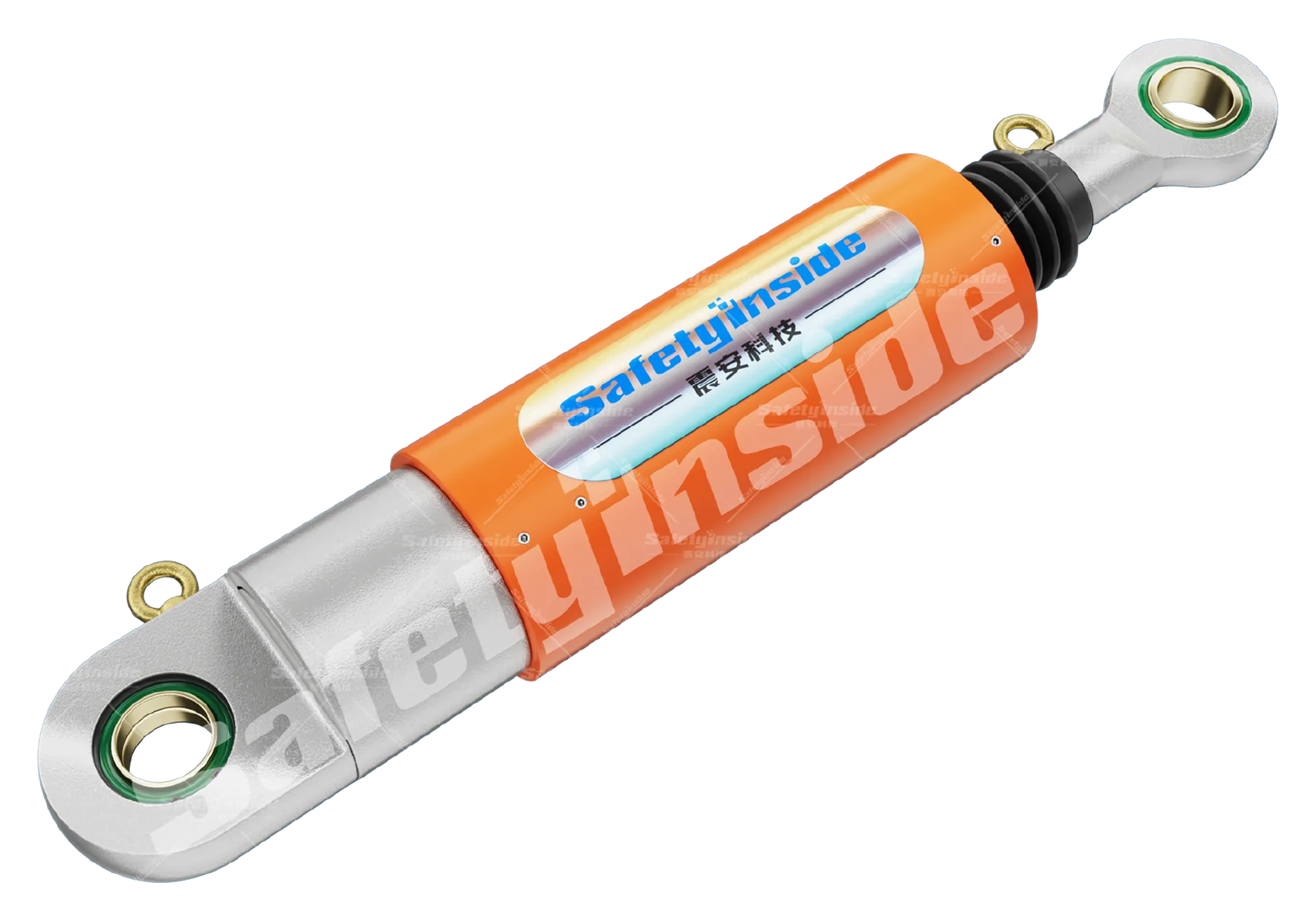
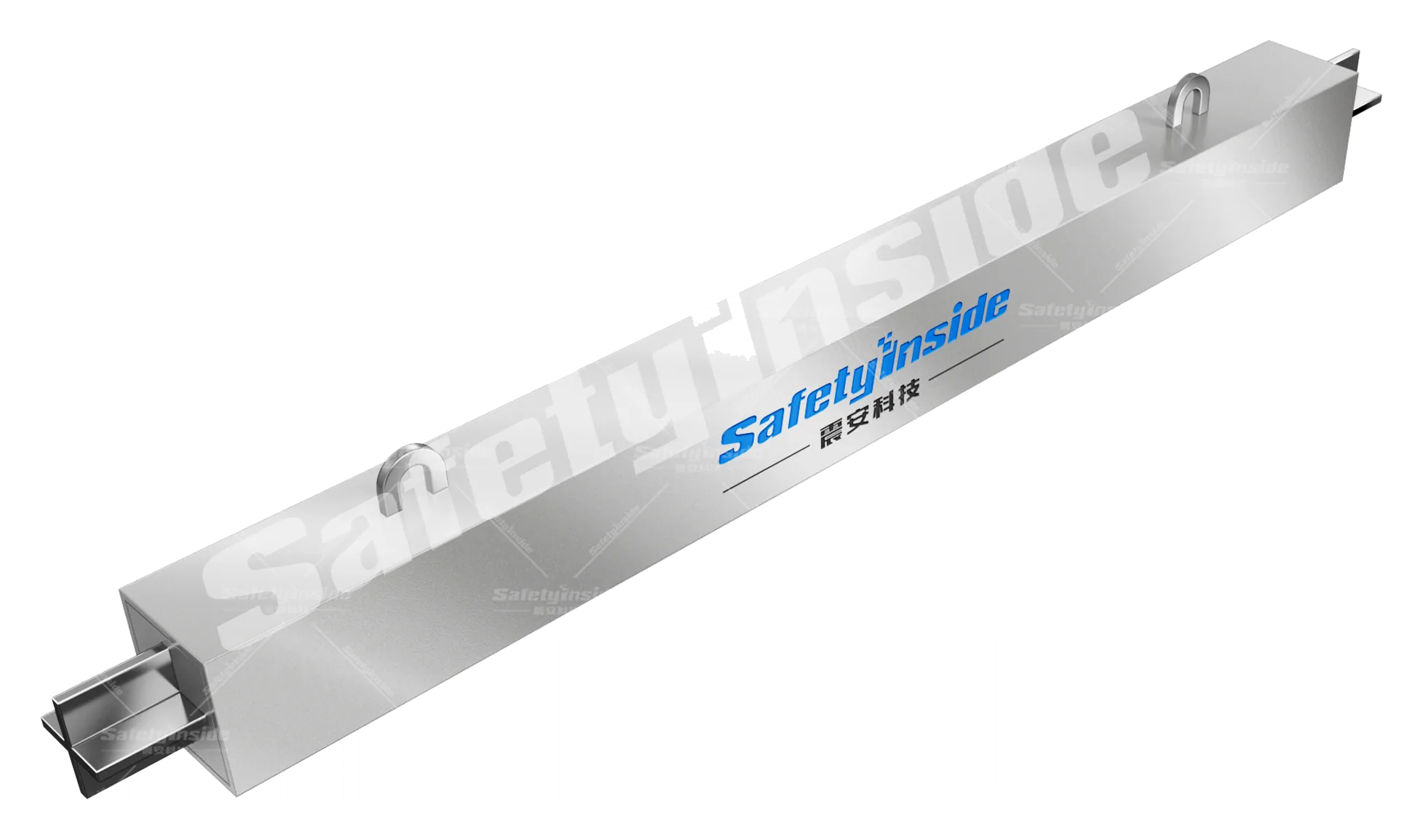
VFD — a piston in a cylinder filled with viscous fluid. BRB — a steel core in a filled casing that prevents the core from buckling in compression.
Two ways to dissipate energy
VFD viscous damper. As the rod moves, fluid flows through orifices in the piston, and the damper produces a resisting force that depends on velocity. It adds damping to the structure with almost no increase in stiffness. It is installed in frame braces or in the isolation layer — together with laminated rubber bearings.
BRB brace. The steel core works in tension and compression and deforms plastically under strong excitation, dissipating energy. The filled casing prevents the core from buckling, so the brace performs equally in both directions. A BRB adds both stiffness and damping to the frame.
Where dampers are used
In a seismic isolation system
VFDs limit displacements of the isolation layer on LNR or LRB bearings.
Frames of new buildings
BRB braces and VFD dampers in the frame reduce displacements and forces.
Strengthening and reconstruction
Seismic isolation or dampers in existing buildings based on a separate analysis.
Hospitals
Buildings that must remain operational after an earthquake.
Advantages
Limitations and considerations
Key parameters
Values are determined for the specific building from the structural model and the input data. There is no universal selection table.
| Parameter | Symbol | Unit | Value |
|---|---|---|---|
| VFD design force | F | kN | per project |
| VFD damping coefficient | C | kN·(s/m)^α | per project |
| VFD velocity exponent | α | — | per project |
| VFD rod stroke | S | mm | per project |
| BRB core yield force | Py | kN | per project |
| BRB length and connections | L | mm | per project |
Certificates and technical materials
Safetyinside VFD and BRB catalogues, certificates and test reports are available on request — we will send documents for your project.
Request documentsFrequently asked questions about dampers
How do dampers differ from seismic isolation?
Seismic isolation decouples a building from ground motion and lengthens its vibration period. Dampers dissipate the energy that does reach the structure. They are used separately or together — for example, VFDs in the isolation layer.
When is a VFD chosen, and when a BRB?
A VFD adds damping with almost no increase in stiffness and works at any vibration level. A BRB adds both stiffness and damping to the frame and dissipates energy through plastic deformation of the core. The choice is made by analysis of the specific building.
Do dampers need to be replaced after an earthquake?
After a strong earthquake the devices are inspected. Viscous dampers usually remain in service; BRB braces may need replacement depending on the inspection results.
How much do dampers cost?
The cost depends on the number and parameters of the devices and is determined after preliminary selection. We do not publish fixed prices.
Request damper selection
Specify the building type, number of storeys and project stage and attach your materials — an engineer will prepare a preliminary solution.